Editor's ChoiceCategories Credit Type Issuers Blog

Should I Tell Amex That I’ve Lost My Job?

05/05/2009

Here’s a question we got recently.

Dear Mr. Credit Card:

I was hoping of asking you for some advice as others may be in a similar situation. My partner lost his job last week, and we are in the midst of retooling our budget and strategizing on how best to handle the situation until he finds a new position. My question is this: should we use this unemployment as leverage in negotiating concessions from our current credit cards (American Express Platinum and Blue) or are we shooting ourselves in the foot. My first inclination was that we could surely use this as leverage to seek a reduced rate or even possibly a one or two month payment deferral. However, I’m worried about American Express cutting us off at the knees: we use our AmEx Platinum for all of our daily spending and tend to carry a balance that would be difficult (read: impossible) to pay off in one fell swoop. If AmEx were to close our accounts, it would significantly hamper our liquidity, even though our other credit cards are zero-balance. What would you suggest?

Thank you in advance,

Craig

Answer: Craig – I do not think you should. That is definitely a red flag for credit card companies and I have heard instances where rates were increased and credit lines decreased after credit card issuers found out that the primary cardholder is unemployed. These are steps that I would take.

1. Look for a card to transfer a balance

Both of you do carry a lot of debt. I suggest you either transfer your balances (or at least some of it) to another card or get a new card with 0% balance transfer deal.

2. Call credit card company

Yous should try calling the credit card company to see if they would reduce your interest rate. I wouldn’t even mention that you are in any sort of financial difficulty or anything like that. You should say something to the effect : “Hi, I noticed that my interest rate is x%. I am calling to see if I can have that reduced. The see what the customer rep says. If the customer rep says “No”, then just insist that you want to speak to the manager. If you get negative answers, simply call again at another time and you’ll get perhaps a more friendly rep.

Remember, you have to be polite because you are not in a position to pay off the debt, unless you are sure you can transfer the balances to other credit cards.

3. Make every attempt to pay all your bills on time

While universal default will not be allowed to be practiced next year (on the passing of the latest credit card bill of rights), the reality is that at the moment, credit card companies have been increasing interest rates if you have been late on your other bills. So make sure both of you continue to pay your bills on time.

4. Make Sure Your Partner Files for Unemployment Benefits

Make sure your partner files for unemployment benefits. This will definitely help you tide over the present situation.

Contingency Plans

While it is good that both of you are retooling your budget, I would say that you should also plan for a worse case scenario (ie your partner takes a while to find a job). For example, if you have two cars, you may consider selling one.

OK – I’ve been going on and on. But the bottom line is that you should not tell Amex about your partner’s unemployment situation.

Note – If you are in a similar situation, we would appreciate if you could share your views and tell your story.

Employee Credit Cards

05/04/2009

Let’s face it, business travel and expenses are the best way to rack up credit card rewards. When I travel on business, I like to think I am rather frugal, but I can easily ring up $1,000 a week on hotel, rental cars, and meals. I am talking about $20 dinners and $100 hotel rooms in small to mid sized cities. Go to any major world city, and those numbers double. Add in airfare and now you can easily rack up $5,000 to $10,000 a month in expenses if you are a road warrior.

Who Pays?

Obviously your company is reimbursing you for these expenses. The question is, should you accept a company credit card. The answer is: it depends. There are two types of “company credit cards.” There are one’s where you are ultimately responsible for the payments, and ones where the company is, and you are merely an authorized user.

I would not bother with a card where I am ultimately responsible for the payments. There is too much potential for abuse if others are on the same account. Here is a story about a woman who was using her company’s credit card, and then got laid off, and then got hounded by creditors for the unpaid bills to the company card. Ultimately, if the she is responsible for the charges, she is out of luck.

What If Your Company Is Responsible For The Card’s Payments?

This can be a good arrangement. If you do not have enough credit to sustain the business expenses you are expected to incur, this is a great option if your company offers it. It is also the preferred option if you carry a balance on your personal cards. The last thing you want to do is have your business expenses adding to your balance. Considering the nature of double cycle billing, this will hurt you as you will be paying interest on your business expenses, even after you and your credit card has been paid off.

The other situation in which this would be a good arrangement is if your company does not reimburse you in a timely manner. I have seen companies where the expense reports go through a few levels of approval before being rejected for a typo or an illegible receipt. If an approver or someone in accounting is on vacation, it can take several weeks until a check is cut. If your employer functions like that, you might just want to accept an offer for a company card. Typically a company will ask you not make personal charges, something that you would be wise to obey if you value your job.

When Should You Say, No Thanks.

You should try to put all business expenses on your own personal card only if you have confidence in the following:

This sounds like a lot of conditions, but if you can meet them, you are set to reap some serious rewards from your business travel. If you are able to charge your airline expenses to a airline partner card, you will likely get double miles. If you use a cash back card for other expenses, you can get up to 2% back.

Making It Work For You

When I had just graduated from college, I took a job traveling around the country installing software systems and training the users. I was making very little money, but I was able to charge most of my expenses to my personal credit card. The company I worked for was a small, but growing operation, that could be counted on to reimburse me almost immediately upon submitting my expense report. In fact, I probably made a little money on all the interest accrued between the time I received my expense check, and when my credit card payment was due. I also received a ton of frequent flier miles from all my travel expenses. These miles effectively increased my earnings at that company by a significant amount. Ultimately, I was able to use my vacation time to jet off to destinations that belied my entry level salary.

What If You Are The Boss

If you are a business owner, and you have employees who travel on company business, you are sitting on a potential gold mine of rewards. Just about every reward card has a corresponding business card, and the responsible party is typically the one who collects the rewards. If you trust your employees not to go on unauthorized spending sprees, you can insist that all business expenditures be made on the company card. In that way, you could easily end up collecting massive amounts of reward points or cash back, without ever leaving home.

Either way, reward points and cash back represent a large source of value to be derived from business expenses. It is up to you to make sure you can retain as much of the rewared as possible.

My Mom Used My Credit Card And Racked Up $8000 In Debt. What Should I Do?

Here’s an email we got recently :

Mr. Credit Card

I am so confused on what if anything that I can do about my situation. When I first turned 18 I applied for a credit card, and got approved. I did not know about this credit card until one day my mom came crying to me that she thought I called to tell them it was stolen… but really it was her that was using it. After giving me this long sob story I – stupidly – agreed to make her able to use the card. She promised to make the payments, turns out you can’t even trust your mother! Now I am in debt $8,000! I have no idea what if anything I can do. Please if you have any advice!!

Crystal Smith

Answer: Crystal, looks like Mom has broken your trust. I have to ask you a couple of questions first.

I would assume that you approved Mom to be an authorized user of your credit card and she is not a joint account holder. If this is indeed the case, then all you have to do is to remove your Mom as an authorized user and she will not be able to use the card in future. I would suggest having a word with her first and confront her. You will have to tell her that what she did was unacceptable and that you would have to remove her as an authorized user. Here is an action plan.

1. Set a Budget and a Payment Plan

I would assume that you are not able to pay off the $8,000 at once. You said you were 18 years old when you got the card, but I do not know how old are you now or whether you are in college now or are you working and earning some income. What you should now do is to set up a budget, look at your income and expenses and figure out a payment plan that will eliminate this $8,000 in credit card debt. You may have to cut back on some spending. But what you want to avoid is having to just pay the minimum.

You can use this calculator from CNN to help you figure out a realistic time frame to pay off the debt

to figure out how long it takes to repay your credit card debt.

You may have to make some sacrifices and work part-time if you are at school. Or work more if you are already working part-time.

2. Explore Balance Transfer Opportunities – You did not mention what rate you are paying on your card. I also do not know your credit scores. But definitely explore 0% balance transfer credit card deals. They will help you save on interest payments and your cash flow in your quest to eliminate this credit card debt.

3. Confront Your Mom

Once you figure out a plan, I would then confront your mom and at the end, ask her if she would bear some burden in your payment plan. Ask, but be realistic and do not expect anything.

I would be firm with your Mom and tell her how disappointed you are, but also be nice (in the sense that this should not turn into a shouting match). Bear in mind that what she did was wrong. She should never have been using your credit card (she should have got her own). She has broken her promise not to pay. You also have not told us about her situation : what does she do? how much does she make? Can she afford to pay?

4. Try to Get Refunds

There are other things you can do. For example, find out what has your mom been ing. Has she made any impulse purchases within the last month (like BowFlex on QVC). If you has bought some high ticket items within the last 30 days, you may be able to return and get a refund (especially for late night infomercial products).

5. Remove her as an authorized user

I’ll leave it to you whether to do this before you speak to her or after, but either way, this has to be done (IMO).

To summarize, here are your actions steps :

  • Set a budget
  • Come up with a plan to pay off your credit card debt. You use use some online calculators like this one from CNN to help you figure out a realistic time frame to pay off the debt
  • Explore Balance Transfer Opportunities
  • Sit down with your Mom – tell her how disappointed you are and that you are now stuck with this $8,000 in credit card debt
  • Show her your plan and ask if you would help – I would not count on it though
  • Tell her that you would have to remove her as an authorized user and ask her to get her own credit card (BTW – you can recommend my site!)
  • Sometimes life sucks and things happen. Stay focused. You need a plan to reduce this debt, stop the problem and move on. And also learn your lesson. If you are still in college, you may have to work part-time and if you are already, you may have to put in more hours. Remember, at the end of the day, it is your credit. Your credit score will affect whether you can rent, get an auto loan when you decided to a car and even affect your employment prospects. Pay off the debt ASAP and move on.

    Oh – one more thing. You did not mention this in your mail (and I do not know your entire situation), but would speaking to your father about this help?

    Anyway, hope this helps. Good Luck.

    All Sorts Of Credit Card News Today

    05/01/2009

    Credit Card Bill Of Rights

    First, kudos to the US House of Representatives for passing the Credit Card Bill Of Rights. The real challenge remains in the Senate, yet supporters hope to have this passed by Memorial Day. It is notable, however, that the current bill allows one year for compliance of most provisions. I propose to send them a little booklet in the mail with fine print saying that if they don’t like these changes, they are free to cancel all customer’s accounts within 15 days.

    Delta American Express Ups Their Sign Up Bonuses, But Are You Really Getting More?

    Delta is offering up to 40,000 SkyMiles as a sign up bonus for the Delta SkyMiles American Express Card. Here is how it works. You get 25,000 for the initial signup, and another 10,000 when you purchase over $1,000 in your first three months. These offers appear to be targeted to NorthWest Airlines cardholders and they do tend to vary in miles.

    Here is the problem. Delta miles have become the least valuable of all airline miles. Their new three tiered reward system is notorious for never having anything availible in the “Low” tier. Sadly, the SkyMiles necessary for redemptions in the “Mid” tier are much, much more than the low. It should, more accurately, be labelled “low”, “high”, and “Sucker”. Even many of the “mid” tier redemptions are producing less than one penny per mile of value, making it more cost effective to merely use the “pay with miles” option.

    So yes, you can get a lot of SkyMiles by signing up for the American Express Delta card, but you will find that 40,000 miles doesn’t really take you very far anymore.

    Here Is A Worthwhile Northwest/Delta Promo

    It seems that Nortwest is offering a promo that will give you a thousand extra NWA WorldPerks Miles for each unique purchase at their shopping portal. It didn’t take long for the mileage gurus at FlyerTalk to start finding ultra cheap items that will qualify. It turns out that there are plenty of items priced around a$1 that will qualify for 1,000 miles. The trick is avoiding shipping costs. The way to do this seems to get an item that you can pick up at the store, or perhaps an intangible good. Such goods include music downloads, gift cards, and donations to charity. Yes, the legwork is significant, but if you have a little time and creativity, you can easily get 10,000 miles, per account, in your WorldPerks account, for under $20. The miles are then easily transferred over to your Delta account. The way to maximize this would be to make several purchases, one for each member of your family, and then pick them all up at once. It is not hard to see how a couple could get 20,000 miles for minimal effort and money, that is easily worth at least $200 off of your next trip.

    Late Fees For Paying Your Credit Card Bill Early

    From the Consumerist is an interesting story about a woman who thought she was paying her Capitol One credit card bill early, and ended up being charged a late fee. While this sounds insane, if you think like a credit card company, it is not. She payed her bill before the statement ended, so technically she made a payment during her previous statement.

    It would be as if last month I paid more last month than the combined minimum of this month and the previous month. I couldn’t just call the credit card company and tell them my payment was early this month. They will credit my payments last month to my statement last month, not as an early payment for the following month. In fact, I would be pretty upset if they didn’t. Like much in the Consumerist, it makes a great headline, “Woman gets late fee for early payment”. Fortunately, it does illuminate how payments to credit card companies work. The moral of the story is that you want to be extra careful making early payments. If you are planning on being out of the country or something during the week or two between the time you get your statement and it is due, early payments may create more problems than they solve. In addition to the problem described, early payments creating a positive balance can also trigger a fraud alert.

    Your best bet is to stay in touch with your credit card company, and try to pay your bills on time electronically. Capitol One did reverse the charge when it was brought to their attention. I have read many complaints about Capitol One, but frankly I have had mostly good experiences with their customer service, for what it is worth.

    Credit Card Car Rental Rewards

    04/30/2009

    This is a car rental rewards question from a reader :

    I am looking for a card that has car rental rewards similar to airline rewards – e.g. accrue 25k points and get $500 applied to car rental. What cards offer car rental rewards??

    Toni Bradley

    Answer – Toni, most credit card reward programs have car rental rewards. So here is a run down and comparison among all of them.

    American Express Membership Rewards – The Membership Rewards Program from Amex has got 3 car rental partnerships (used to be six!). Their partners are Avis, Hertz and Enterprise Rent A Car. The way the reward program works is that you can exchange Membership Reward Points for gift cards for either one of them. You can obviously use these cards when you rent a car from them and also enjoy special upgrades.

    Aside from that, certain American Express Cards offer extra perks. For example, the American Express Platinum Card offers complimentary premium memberships with Avis, Hertz and Enterprise Rent A Car so that you can bypass lines when you rent a car.

    membershiprewardscarrental

    Citi ThankYou Network – The ThankYou Redemption Network is Citicards’ reward program. There are two ways to use their program for auto rentals. You can redeem points you have earned for Avis gift cards.

    Alternatively, you can use points and book car rentals through Expedia.com. Every $1 in travel expenses requires 100 points to offset it.

    An example of the travel rewards card from Citi with the ThankYou program is the Citi PremierPass(SM) Card

    thankyoucarrental

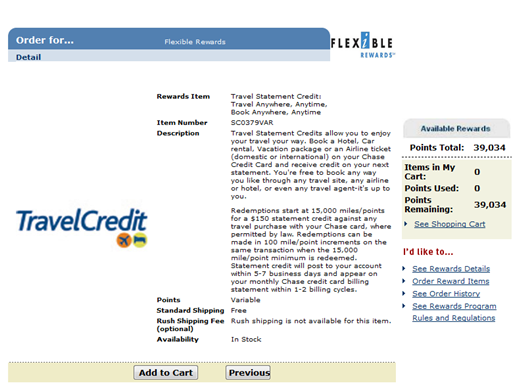
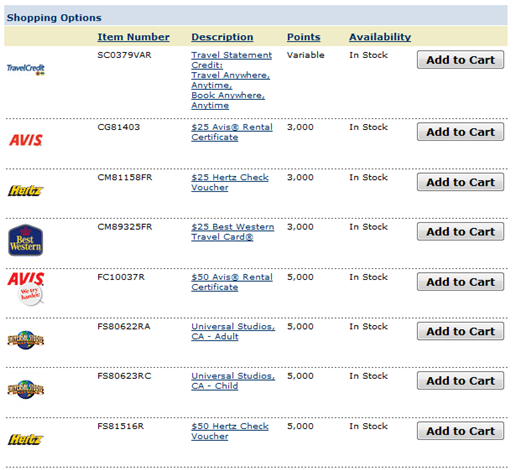
    Chase Flexible Rewards – The Chase Flexible Rewards Program allows you to exchange reward points for gift cards in Avis and Hertz. They also have this feature called TravelCredit where you can book your car rental and use the points you have earned to offset it. You will need to use a minimum of 15,000 points (to offset $150 in travel expenses including car rental).

    flexiblerewardstravelcredits1

    flexiblerewardscarrental

    WorldPoints – WorldPoints (reward program of Bank of America’s credit cards) have partnerships with Avis and Hertz. You can exchange points for gift cards of these two car rental companies.

    worldpointscarrental

    Capital One Rewards – If you have a Capital One rewards card with their No Hassle Miles or Points program, you can exchange points for an Avis gift card. However, it takes more points to redeem for a fixed value in gift cards compared to other programs. For example, if you look at the screenshot below, you will find that it takes 20,000 miles or points to redeem for a $100 Avis gift card. For other programs, see the screen shots, it only takes on average 10,000 points to redeem for a $100 gift card.

    Capital One also allows you to book your own travel expenses and use their points to offset what you have paid. 10,000 points or miles are required to offset $100 in travel spending.

    capitalonecarrental

    capitalonetravel

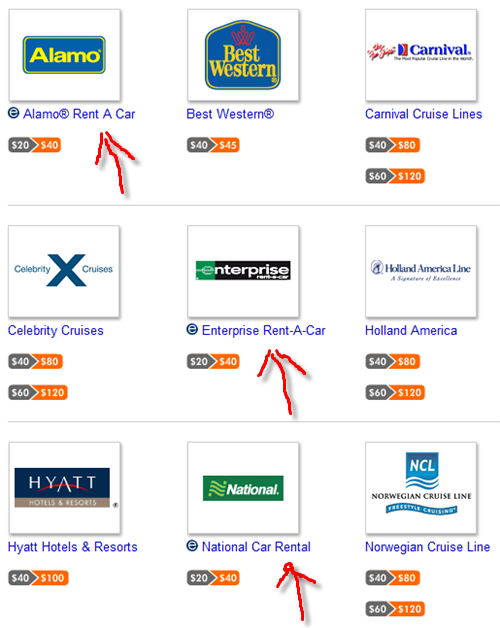
    Discover Card – If you have the Discover® More(SM) Card, you can exchange the cash rebates you have earned on the card for gift cards with Alamo, Enterprise Rent A Car and National. The great thing is that Discover allows you to double the value of the rebates you have earned if you redeem for these car rental companies gift cards.

    Discover also allows you to earn 5% cash back bonus for Travel from January to March every year.

    discovercarrental

    discovercashbackbonus

    Summary – So that’s it. These are all the major card issuers and their auto rental rewards. Most offer auto collision insurance when you rent a car using their card so you do not have to pay extra for that. The card you choose for car rental rewards really depends on which rental company you use and how you want to redeem your points.

    A Different View On Credit Card Regulation

    04/29/2009

    I love dissent and I love a good debate. My views on the proposed credit card bill of rights is well known (I strongly support the idea). From the Huffington Post blog site, comes a different view on the regulation of the credit card industry. Alan Schram, a hedge fund manager has written an editorial titled “The Folly of Credit Card Regulation.”

    It it he makes the argument that the credit card industry does not need any more regulation as it is already a very competitive marketplace. He contends that further regulation will restrict credit, and increase interest rates, which will have a negative effect on the overall economy.

    Where I Agree With Him

    I do believe that the current credit card industry is very competitive. I frequently remind disgruntled credit card customers that their business is valuable, and they should move on to another bank if they are not treated the way they deserve to be. I may even grant, to a limited extent, the argument that increased regulation will lead to somewhat reduced credit availability, but that is where our opinions differ.

    Where I Disagree

    First of all, his argument that credit cards are very competitive, while true, does not mean that consumer protection is unnecessary. That argument could be made for any competitive industry. The insurance industry is also highly competitive, should we not regulate it? Consumer products too are a very competitive market, should we end regulations there?

    I would ask Mr. Schram why the current level of credit card regulations is optimal? I think most consumers would argue that it is in fact under regulated and that credit cards are too widely available. People receive numerous credit card offers that fill up their trash cans and shredders already. It is not unheard of to receive offers meant for deceased relatives, children, and even pets. I think most Americans would gladly trade a few of these offers for some realistic consumer protections.

    Furthermore, burying terms and conditions in many pages of fine print is not my idea of a competitive marketplace that is consumer friendly. I am just at a loss to think of another industry that reserves the right to change the terms of it’s contracts arbitrarily on transactions that have already occurred.

    Finally, I would also argue that not every reduction in credit is a bad thing. Clearly, when credit is extended to those who are unable to pay it back, everyone suffers. The banks suffer a loss, and the credit worthy are ultimately held to higher interest rates. You only have look at the numerous instances of credit worthy customers who’s rates are going up for no reason of their own to see that this is occurring. In fact, you only have to look as far as our own MrCreditCard himself!

    Clearly the threat of higher interest rates is a fairly empty one for a number of reasons. First, people are seeing their interest rates go up right now anyways, so that horse has already left the barn. Second, they are unlikely to go up any further since, as he says, the market is so competitive anyways. Credit card companies are competing on rewards for those who pay their balance in full, and on interest rates for those who don’t. On the terms and conditions that people find objectionable, there is almost no competition whatsoever. Of all the credit cards I have, the terms are indistinguishable. On the other hand, I am constantly getting offers for lower rates.

    Conclusions

    Ultimately, his argument boils down to this question “What regulations are necessary on a competitive market”. He argues that a competitive market functions best with fewer regulations. I would argue that the existence of competition with an industry does not preclude the need for effective consumer protections. I would think that the experiences of the rapid deregulation of the financial industry over the last eight years has put his argument to rest permanently. A person in the hedge fund industry should know better.

    Now that I read his commentary again, I am wondering if it is in fact just a “modest proposal”. Perhaps I have misjudged him.

    Capital One Raises Interest Rates After Balance Paid Off! What happened to Customer Loyalty?

    In my previous post, I mentioned how Chase actually upgraded my credit card to a Visa Signature status. However, for many folks, getting their credit lines cut and interest rates raised even though they have always paid on time or even paid in full, seems to be happening more frequently these days.

    I just received this story from Matt of Financial Methods who had his interest rates from his Capital One card jacked up after he paid off his balance! He is pretty philosophical about it and just wonders what has happened to customer service. By the way, you can subscribe to his blog here.

    Here is his story:

    As I wrote about in the beginning of march, Capital One jacked up my interest rate, just after I finished paying off my balance. It started relatively high (compared to where I would like it) at 13.99%APR and jumped to 17.99%. The notice that I received in the mail indicated that the change was to start on Feb. 16th, the strange part about that was that I did not receive the notice until March 1st. Needless to say, I was frustrated. I was also glad that I had paid them off and that I would not be giving them the extra profits that they were forcing upon other customers.

    After researching, and from word of mouth (I do work at a bank, after all) I discovered that this was not a random act of unkindness from Capital One and this has actually happened with many cardholders. Forget that I have been a loyal customer for years and have never had a late or missed payment. Also forget that I had carried a balance for years, usually paying the minimum and in the process, giving them loads of money. Now, keep in mind that I do not intend to carry a balance on this card again, but the rate does still matter to me. After all, sometimes life happens. It was time to make the call.

    Nobody likes to go through the monotony of calling customer service. The annoying menus and long hold times just add to the frustration of why the call is being made in the first place. Regardless, I try to make these calls when I am in a relatively good mood. The operators are almost always more receptive to a calm, cool voice on the other end of the line. I often try to put myself in their shoes and imagine their level of annoyance or anger toward who is on the other end of the line. I think like this, because I know that if it were me in their shoes, I would be getting mad, and the madder that I get, the less willing I am to help.

    Surprisingly, I was only on hold for about two minutes before I got to a real person. She sounded young (20’s maybe) but experienced. Judging by the language she used, she has been doing the job for a good amount of time and no doubt gets calls like this all the time. Instead of typing out the entire conversation that only lasted a few minutes, here are the highlights:

    Me: I’m calling to find out why my interest rate was recently raised and to ask that the decision be reviewed and my previous rate be reapplied.

    Capital One: Due to recent delinquencies on a larger percentage of our credit lines, many customers’ rates were raised.

    Me: I understand that the economy has been poor, but is it really fair to penalize customers like myself who have never had a late or missed payment?

    Capital One: Unfortunately, we will not be able to reinstate your previous interest rate. We have reviewed your account and you are not eligible for a reduced rate at this time.

    Me: You do realize that I do not even currently carry a balance.

    Capital One: I’m sorry sir, at this time, there is nothing further we can do regarding this matter.

    There you have it, take a good customer with good credit and try to get a little bit more out of him and what do you get? One less customer. I will not close my card, but I do not intend to use the card for anything more than a few dollars. I definitely will not carry a balance on the card ever again. I just do not understand the mentality. Jack up the rate on delinquent or frequently late customers, do not go after the good ones.

    So I ask, what ever happened to putting resources into customer retention? Too many businesses will pump billions into attaining new customers, but spend far less to retain the ones that have put them where they are. I am not trying to stage an uprising against Capital One or any other business. I am merely voicing my frustration with what I view as an unfair situation. It also makes me wonder how many thousands of other loyal Capital One customers have been through the same grief.

    Mr Credit Card: If you have had similar experiences, please share them with our readers by commenting below. Tell us what happened and share your thoughts if anything triggered it. What did you do? Have you applied for a new card?

    Chase Upgrades My Card to Visa Signature!

    04/28/2009

    I just got another letter from Chase. Once again, I feared that my credit lines would either be reduced or my interest rates increased (even if I use no where close to my credit limits and pay in full automatically every month!). But phew, instead the letter was telling me that I’ve upgraded my card. Here was what the letter said:

    Dear Mr Credit Card

    Congratulations
    We are pleased to inform you that we will be upgrading your Chase Flexible RewardsSM credit card to the Chase Visa Signature&#174 card at no cost to you. You’ll keep your current rewards program and all of your rewards – and your account number will remain the same so you can continue to use your current Chase card(s) for all of your purchases. Here are some of the new benefits you’ll enjoy:

    No Overlimit Fees
    Your Chase Visa Signature card comes with a credit access line instead of a credit limit and will have no pre-set spending limit, which means greater spending flexibility without having to worry about overlimit fees and gives you peace of mind when you need to make a large purchase.

    Visa Signature Benefits
    Your upgrade comes with several exclusive benefits from Visa Signature, including:

    Go to www.visa.com/signature for all the latest events and offerings

    The upgrade to your card will occur automatically on May 29, 2009 as long as you continue to meet our credit criteria. You’ll receive your new card and benefits brochure shortly thereafter. If you have any questions or choose to opt out of this upgrade, please call the number listed on the back of your card by May 24, 2009.

    Thank you for being a loyal customer and continuing to choose Chase. We truly appreciate your business.

    Best Regards
    Deb Walden
    Executive Vice President, Customer Experience
    Chase Card Services.

    Nice – then on page two of the letter was the “change in the card holder agreement”!

    Changes in terms notice/new cardmember agreement terms

    Credit Cards And College Students

    04/27/2009

    Sallie Mae just came out with a report that summarizes trends in credit card use among college students. The results are pretty eye opening. I would like to discuss them for a moment before issuing my recommendations for credit card use in college.

    The Results

    A summary can be found here, but briefly:


    My Analysis

    Almost all of this report surprised me to some extent. I am amazed that people would put tuition on a credit card for any other reason than to utilize a reward card, while paying their balance in full. I would like to believe that was also the intent of purchasing school supplies on a credit card as well. Unfortunately, with only 17 percent of students saying that their credit card is being paid every month, the idea that college students are responsible reward card aficionados is simply impossible.

    Students had on average 4.6 credit cards, which strikes me as quite a large number for a population with little or no income.

    What might be even more amazing is that only 1 percent had parents paying the credit card balance.

    My Recommendations

    Clearly, parents need to have a greater role in teaching their college age children how to handle credit cards responsibly. Here are some basic guidelines that I would recommend.

    1. Try Hard Not To Finance College With Credit Cards – Bravo if you are paying your tuition with a credit card in order to score reward points, but only if you are paying it off in full at the end of the month. If you are actually financing your education through credit card debt, you are making a grave mistake. Credit card debt is the worst form of debt there is. It has terrible interest rates, payment terms, and the interest is not tax deductable. Furthermore, the credit card companies are free to change the terms at any time, for any reason. In reality, it is only slightly more prudent than taking a loan from the mob.

    Spend the time to work with your school’s financial aid office and get education loans from the government and private banks.

    2. Teach Your Children How To Use A Credit Card Before They Attend College

    Credit cards are useful tools to make payments while avoiding carrying cash. Show this to your children by getting them a card on your account at an early age. Tell them that they are only able to use it with your permission, or in an emergency. Require them to pay you back for all charges out of their savings. Get them in the habit of only using the credit card to make purchases that they currently have the savings to pay for. Ultimately, you will want them to have their own card, and show them the importance of paying their bills on time. Follow up with them frequently to ensure that they are paying on time. Go over the bill with them and point out the interest rates and payment terms.

    3. Keep The Number Of Cards To A Minimum

    There is no reason to go crazy with credit cards at a young age. It will be much harder to teach them to monitor their spending habits when they are constantly receiving bills from various cards. With a single card, they will eventually learn when they will get their bill, and when it will be due. Only once they have been paying their card reliably for some time, should you begin to look into a second, backup card.

    Conclusions

    It is clear that our college students are starting off with poor spending habits at an early age. Sadly, these habits are likely to stick with them once they graduate, leading to a life of debt and struggle. It is never too early to start your children on a path to financial responsibility.

    Blogging Away Debt Interview- Tricia eliminates $37,614 of Credit Card in 3 Years

    When I first started this blog in 2006, I checked out various other personal finance blog and came about Blogging Away Debt. It turns out that this blog was written by Tricia and back then, she had over $37+ in credit card debt. She started a blog to, well, document her journey to reduce (or rather eliminate) her debt. A couple of weeks ago, I asked if I could be the first to interview her when she is finally debt free. She told me that was cool and as a matter of fact had wired in the check to completely get her credit card balance to zero. Last week, she announced that she was officially credit card debt free!.

    If you have credit card debt and are looking for inspiration and advice, I suggest you get over to her blog and subscribe to her blog feeds. In fact, now that she has gotten out of credit card debt, she’s got another blogger Beks (who herself in in debt) to blog about her journey (hence keeping up with the spirit of her blog). One of the things I really like about the blog is her writing style. She writes from the heart and about her experiences. You will not find any “top 10 ways to blah blah blah” attention seeking type post on her site.

    Well, it’s a privilege to be granted the first interview since Tricia got out of debt. I hope you enjoy it and take home a few tips from this.

    Mr Credit Card: Can you briefly describe how you got into your debt situation?

    Tricia: My debt started with one of those tables in college where you sign up for a credit card and received a “goodie”. I received a candy bar. In my mind, the credit card was free money so I did not use that card responsibly. It didn’t take long before the card was maxed out. Then the credit limit was raised. I maxed it out again. The cycle began and didn’t stop for many years. Of course, other credit cards were added to the mix as the years went on and that’s how we ended up with over $37,000 in credit card debt.

    Mr Credit Card: Did you explore other options like debt consolidation, debt negotiation etc?

    Tricia: A co-worker showed me an agreement from a debt consolidation program that she was going to do. I didn’t like some of the wording so I never looked into it any further.

    Mr Credit Card: Can you tell how your credit score was when your credit card debt was $37k and how it has moved as you reduced your debt?

    Tricia: My credit score when I first started blogging about our debt was 711. Even though we had a lot of debt, I was very careful to never have a late payment so that has helped my credit score immensely. As of a few months ago, it was at 783. At one point when we transferred all of my credit card debt to my husband it raised to 804 so I am excited to see where it stands with my next update.

    Mr Credit Card: Do you subscribe to any credit monitoring service? If you do, which one would you recommend?

    Tricia: I do subscribe to a credit monitoring service. It started when we were trying to get some financing and I needed to know my credit score. During our debt reduction journey, I wanted to cancel it to save some money since you can get your credit report for free twice a year. But since I blog, I felt having a better eye on my credit report was worth it since I am in the public eye. Since I’ve only used one company, I don’t have anything to compare it to so I’ll refrain from a recommendation 🙂

    Mr Credit Card: How did you come up with a plan to pay off your debt? Were you actually ahead or behind your schedule. Did you strictly follow it or were there deviations?

    Tricia: We did not have a plan in the sense that we had a strict amount to pay towards our credit cards every month. I had an idea of how much I wanted to pay, but the goal was to always earn as much as we could and spend as little as we could. Extra went towards our debt. To do that, I read A LOT. I mostly read other blogs since I found the greatest tips there. I’d take tips that would work for our family to make what I call our “Recipe for Debt Reduction”. Everyone’s recipe will be a little different because everyone’s situation is a little different. Personal finance is not one size fits all.

    There were some months that were tough and some were great. I loved to pay big chunks of debt off at a time. I think it gave me a “high” of sorts. It became addictive.

    In the end, we were able to meet our goal date, although we had to pull some money from our savings account. Now the next step is to replenish that money as soon as possible.

    Mr Credit Card: What advice you do have for setting realistic budgets?

    Tricia: Ahhh…budgets. Budgets (in the traditional sense) and I never got along. In general, though, I had an idea in my head of how much certain spending should be. Since I have been tracking our finances using financial software for over 10 years, I knew what to expect for our spending and we went from there. So if you are trying to set realistic budgets, I think it’s very helpful to look at your past spending for at least a year (if you can) to get an idea of what is normal. Then try to lower it as much as you can from there.

    Mr Credit Card: How did you deal with temptations to spend on “unnecessary stuff”? or when you know splurging on them will blow your budget?

    Tricia: In my mind, any splurges would make it take longer to pay off our debt. Most of the temptations we had were dissipated by stepping away from the situation and letting it simmer for a few days. Often, we talked ourselves out of a purchase.

    We have splurged a few times, but we thought out the purchases. When you are in debt reduction mode, it can be hard to stick with it in the long haul. So I think an occasional splurge can help you stay on track. But I stress the occasional and thought out splurge part 😉

    Mr Credit Card: Do you use any budgeting software? How do you monitor your monthly spending?

    Tricia: I have been a user of Quicken for many years. When I said that I never had any late payments above, I credit using Quicken for helping to make that happen. I am a bit of a numbers/computer geek so having our finances on the computer suits me well. But, you can also do it with keeping your receipts and then adding them up by type of spending on a piece of paper. I did, however, update our finances to QuickBooks not too long ago since we use it for our business and I like the reporting ability better in QuickBooks.

    Mr Credit Card: You recently wrote an article about how proud you were of your son as he has picked up good frugal money habits. But there must have been situations in the beginning when you keeps asking you for stuff cos his friends have them (I know that is the case with my kids). How did you deal with that?

    Tricia: That is a tough thing to deal with. As parents I think we want the best for our kids. Our son was spoiled before we started our debt reduction journey. We bought him so many toys – I think Fisher Price has some excellent people working for them because they drew mom and dad in with their expandable sets (e.g. Little People).

    After we started reducing our debt, things changed. It probably wasn’t the best way to handle it at first, but if our son wanted something really bad we’d mention that perhaps he could ask for it for Christmas or his birthday. Sometimes it worked – sometimes it would result in some tears – sometimes mom and dad did give in, but got something that didn’t cost quite as much as what our son originally wanted.

    As we started learning more about personal finance, we started sharing information with our son and introducing the idea of saving up for a purchase. When he was able to purchase something he saved up for, we gave him a lot of praise and told him we were proud of him for saving up. You can tell he’s proud of himself too.

    There was a recent situation where our son had money saved up and wanted to a toy that one of his friends had. We went to the store and he decided to not it once he learned the cost. He had the money, but he didn’t think it was worth it. You can almost see the wheels turning in his head since he’s starting to understand the concept of value.

    Now we take time to help him think about things without telling him he cannot something with his own money. Does he really want it? Will he use it? He has experienced er’s remorse (“I shouldn’t have bought this. I should have saved up for the other toy.”). It’s tough to let him make these little mistakes, but we are here to help guide him. We’d rather him make these little mistakes now than the big ones when he’s older.

    Mr Credit Card: You talked a lot about this on your blog – in that you were in charge of finances in your home. How did your goal and the process of getting rid of debt, setting a budget, being frugal affect your relationship with your husband?

    Tricia: My husband has always trusted me with handing the finances – even though I was the one who got us in the credit card mess in the first place. He was not one to go out and spend money without talking to me first. I was the one that spent money without talking to him first. So it was natural that I wanted to take the lead to get out of the mess since I got us into it.

    My husband has been fine with that. There have been some frugal things I wanted to try that he was not crazy about but he went along with it. Then there are some times where he looked at me like I was nuts when I mentioned a new idea. I’ve been known to go overboard, and he keeps me in check. Then there are also the times where I was tempted to purchase something and he was there to ask me, “Do we really need it.”

    Overall, we survived mainly because we were on the same page and we have the same overall goals. Even though I was leading the journey, he provided a great deal of support along the way. He was the rock that provided stability to my sometimes impulsive nature.

    Mr Credit Card: In your blog, you have documented some unexpected circumstances that temporarily caused you to missed your budget (like car repairs) etc. How has that affected your views of emergency funds? How many months of emergency funds do you have and what is your opinion of how much to have?

    Tricia: I was against having an emergency fund in the beginning. My thought was that our credit cards were our emergency fund. I took advantage of opening up an online savings account to receive a bonus and I found that I liked having money in the bank. We slowly started adding to it and I found comfort in it.

    Even though we had available credit to use for car repairs, I loved the fact that we had some cash on hand to be able to pay for it. I think it gave me a sense of power. We may have had a lot of credit card debt but we had some money set aside so we didn’t have to go into more debt.

    Right now we have enough in our savings for a little over a month. We’d like to eventually increase that to 6 months…maybe more.

    Mr Credit Card: Now that you have no credit card debt, will you cut up the plastic or do you feel that you now have the discipline to pay in full every month? You mentioned that you have 7 credit cards? How do you plan to use them in the future? Any plans to get a cash back card and actually get some cash back?

    Tricia: I am not anti-credit card. I think that surprises a lot of people. While I do not agree with their practices and I find some of them outright sneaky – they were never to blame for our credit card debt situation. I was the one that was swiping the card knowing that I didn’t have the money to pay for what I was ing.

    There is one card that we have been using for a while just for the cash back. It is paid in full multiple times a month and we do not use it unless we have money in our checking account to immediately turn around and pay it. We didn’t use any credit cards in the beginning – we only started doing that once we felt like we had the discipline to keep it under control. So far it has been working great and it’s nice to finally earn something back (we’ve earned $160 so far!) rather than pay them thousands in finance charges. But you have to be disciplined and very, very careful.

    Mr Credit Card: You have made use of 0% balance transfer deals. Could you tell us how you chose the cards and what advice would you give others who plan to use this method?

    Tricia: There are some credit card companies that I consider “good” companies. Some are “bad”. I always done balance transfers with the companies I have had good experiences with. I think the biggest thing I learned about balance transfers is that once you transfer the balance from one card to another – you do not use the card you transferred the balance from! I did not do that and it contributed to our large credit card debt balance.

    Mr Credit Card: Do you set up autopay on your credit card bills or your other bills for that matter?

    Tricia: I do have credit card autopay for one bill. I did it for a special promotion but haven’t put any other bills on autopay. I may consider adding more in the future. I don’t think I’m ready for that yet.

    Mr Credit Card: You have negotiated with credit card companies to reduce your interest payment. Could you tell us how the conversation went and what advice would you give to others looking to do the same thing?

    Tricia: Calling our credit card companies to reduce our interest rate didn’t always work. I wrote up a transcript (not exact) of one of my calls here. A few months later I was successful. I look at it this way – it usually doesn’t take more than a few minutes to try and it’s worth a shot. If it doesn’t work, you aren’t out anything except for a few minutes of your time. If it does work, you can save some money!

    Mr Credit Card: Recently, a lot of folks have had their credit card lines reduced or their interest rates hiked. Has that happened to you?

    Tricia: Surprisingly, no. In fact, our credit limits have been raised by two of our cards within the past few months. In light of what has been happening to others, we have been trying to use all of our cards at least once a month to keep them active. After we use them we turn around and pay them off regardless of when the statement comes. At some point, though, we will start closing some of our newer cards to simplify our finances.

    Mr Credit Card: Are you worried about getting back to old habits and getting into credit card debt again? Or has the last 3 years permanently changed your spending habits for good? Are you taking any steps to make sure you will not get into credit card debt again?

    Tricia: That fear is always there. For me, I am an emotional spender and I become impulsive at times. It’s a dangerous combination. Now that I’ve realized my weaknesses, I try to deal with them in a healthier manner. I also try to keep away from the stores if I think I may have urges to overspend.

    In regards to our everyday spending, I think we are in a great place since we’ve learned so many great spending habits. There is some danger, though, of gradually getting back into bad habits. I will still be tracking our finances going forward so we can watch for things like that.

    Mr Credit Card: During my first 10 years of working, I had no mortgage (which was a great feeling). Now that I have one, it feels like a burden and to me, that is like having credit card debt. Now that you have no more credit card debt, how do you feel about your mortgage and student loans? Does it bug you like your credit card debt did and do you plan to pay down off sooner than your loan term? Maybe the better question is what is the new financial goal for yourself and your family?

    Tricia: Both our mortgage and student loans will be paid off sooner than the loan terms. However, it will not be at the same pace as we paid off our credit card. We really scrimped on some expenses while in credit card debt reduction mode so there is some money we need to spend (like making some repairs to our home that we put off). We also want to get a healthy amount in our savings and we need to get some retirement contributions going. So there are many “baskets” to get filled. We are not sure how much each one will get just yet.

    Mr Credit Card: Any plans to start a blog about quitting smoking?

    Tricia: LOL. While I do want to quit smoking, I think having to write about cigarettes would make me think about them too much and would not be productive. It worked to blog about our debt since we did have to keep focused on our finances to keep track of everything. I may blog about a topic in the future if the right opportunity arises.

    Mr Credit Card: How about some general tips and advice to those in debt and looking to be debt free?

    Tricia: Now that we have paid off our credit card debt, I can look back at our journey and mention a few things:

    1.) Don’t wait another day. After you plug some numbers in a calculator, you may see that it will take years to pay off your debt. I thought it would take forever to pay off our debt in three years. But now that we are here, three years later, it didn’t seem like that long at all. Time flew by!

    2.) Try not to get discouraged. I think it took so long for us to try to reduce our debt because we thought it wasn’t possible with our income (before we started our debt reduction journey we were making less than $30K/year combined). We didn’t have things to cut that were mentioned in many articles like landscaping services or personal care expenses. Once we started making more money was when we started our journey. In hindsight, we did have expenses we could have cut and there was no reason for us to have been in credit card debt in the first place. We could have lived on what we made – we were just living above our means.

    3.) Personal finance is personal. This is related to #2 above. Everyone’s situation is different so all the tips you read may not apply to you. The key for
    us was to search for tips that worked for us to make that recipe that I mentioned earlier in this interview.

    I can think of many other things, but I think the three above were the ones I wish I realized a long time ago. They were the mental blocks that I think prevented us from taking action against our debt earlier than we did.

    Mr Credit Card: Tricia, congratulations once again for getting rid of your credit card debt. What you have achieved is simply wonderful. I wish you all the best going forward

    Tricia: Mr. Credit Card, you sure are a hard-hittin’ interviewer (watch out Anderson Cooper)! Thank you for my first after credit card debt interview 🙂

    Privacy Policy Terms and Conditions About Me Disclosure Contact Me

    Newsletter Sign Up

    Name

    Email